
Agriculture and Natural Resources
If you have tall fescue pastures or hayfields, chances are you have seen broomsedge. It seems to show up almost out of nowhere, especially during late summer, and once it gets established, it can be frustrating to get rid of.
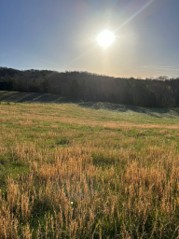
Broomsedge is a warm-season perennial grass that competes with tall fescue and other cool-season grasses. It starts growing in the spring, really takes off during the summer when tall fescue growth slows down, produces its fluffy seedheads in late summer, and turns brown in the fall (Fig. 1). As broomsedge becomes more abundant, it takes up space that could otherwise be producing high-quality forage.
One question I frequently hear from producers is, “Why do I have so much broomsedge?” The short answer is that broomsedge is usually a symptom of a weak forage stand. It tends to take advantage of pastures where tall fescue has been weakened by low soil fertility, overgrazing, mowing too short, or other management issues. So, if you want to get rid of broomsedge, the goal should not be to simply kill the broomsedge, but to make the tall fescue stronger.
Start with a soil test
Broomsedge is often associated with acidic, nutrient-poor soils, particularly soils with low pH and inadequate phosphorus and potassium. Therefore, the first step in managing broomsedge should always be a soil test. If lime is recommended, apply it to correct soil acidity. Apply phosphorus and potassium only when recommended by the soil test, and provide adequate nitrogen to support tall fescue growth.
A healthy, well-fertilized tall fescue stand is one of the best tools we have for competing with broomsedge. However, don’t expect results overnight. Consistent fertility management over several years may be necessary to see a substantial reduction in the broomsedge stand.
Don’t graze your fescue too short
The second piece of the puzzle is grazing management. I know that maintaining 4 inches of residual forage can be challenging, especially when forage is short. However, repeatedly grazing tall fescue down to the ground weakens the tall fescue and reduces its ability to compete with weeds. Maintaining at least 4 inches of residual forage helps the plant retain enough leaf area to recover quickly after grazing. It also allows the plant to maintain stronger root systems and produce new leaves and tillers without relying heavily on stored reserves.
The same principle applies to hayfields. Avoid mowing too short and give the stand enough time to recover between harvests. A strong tall fescue stand leaves less room for broomsedge.
Mow broomsedge when it is growing
Mowing can also be part of the strategy, particularly in hayfields. In this case, the timing is important. Tall fescue is a cool-season grass and slows down during the summer, while broomsedge is actively growing. That gives us an opportunity to target broomsedge when the tall fescue is less affected.
Mowing broomsedge during the summer, immediately before or as seedheads begin to show up, can weaken the plants and prevent seed production. In heavily infested areas, more than one mowing may be necessary. The goal is not necessarily to eliminate every broomsedge plant in one year. Instead, repeated mowing over several years can reduce its vigor and seed production while you work on improving the competitiveness of the fescue stand.
What if my fescue stand is already thin?
Sometimes the problem is simply that there isn’t enough fescue left to compete. Take a good look at the field. If you still have a reasonably strong stand, you may be able to thicken the stand by drilling additional tall fescue in the fall. If the stand is severely degraded, however, simply adding more seed may not be enough. When less than 40% of the desirable forage remains, consider terminating the existing stand and starting over. This allows you to eliminate the existing vegetation and establish a new, uniform stand of tall fescue.
For information on establishment recommendations, see UT Extension Publication PB378, Forage and Field Crop Seeding Guide for Tennessee.
What about herbicides?
This is where broomsedge gets particularly frustrating. Currently, there are no selective herbicides that will effectively control broomsedge without also injuring desirable grasses such as tall fescue. However, there is a way to target individual plants. If broomsedge is considerably taller than the surrounding fescue, a rope-wick or weed-wiper applicator can be used to apply glyphosate directly to the broomsedge.
The idea is simple: the herbicide contacts the taller broomsedge while minimizing contact with the shorter fescue. This approach works best when broomsedge is actively growing, such as after the first hay harvest and before September. A commonly used mixture for a rope-wick applicator is one part herbicide to two parts water. Always follow the product label for application instructions and restrictions.
The bottom line
Broomsedge is not a sign of bad luck, and it is not something we are going to fix with a single herbicide application. If broomsedge is taking over your tall fescue pasture or hayfield, look at the entire forage system. Start with a soil test and correct fertility problems. Maintain adequate residual forage and avoid grazing or mowing too short. Mow broomsedge strategically during the summer to reduce its vigor and seed production. If the fescue stand is thin, consider overseeding or renovating the field. And where practical, use a weed wiper to target individual broomsedge plants.
The key is to give tall fescue the competitive advantage. Broomsedge may take a few years to reduce, but with consistent management, you can shift the balance back toward a productive, high-quality forage stand.
Table 1. Long-term strategy for broomsedge control
| Step | Action | Purpose |
| 1 | Soil test and fertilize | Rebuild soil fertility; support desirable grass competition |
| 2 | Maintain proper mowing height | Prevent overgrazing and thinning |
| 3 | Summer mowing | Reduce broomsedge vigor and seed set |
| 4 | Reseed if needed | Oversee or replant thin cool-season grasses stands |
| 5 | Weed wiper (if applicable) | Spot-treat tall broomsedge patches |